
12 / 17Overview
Slab Foundation Repair Around Murfreesboro, Explained
Many newer homes in the Murfreesboro area are built on a concrete slab poured directly on the ground. A slab is strong, but it depends on uniform soil support. When soil shrinks, washes out, or was poorly compacted, sections of the slab can drop.
Slab foundation repair aims to restore support under the edges and, where needed, the interior, so the slab and the walls resting on it stop moving.
Slab Movement Indicators
- Cracked floor tile or separating hardwood along a line
- Exterior brick cracks near the slab edge
- Gaps between baseboards and the floor
- Doors out of square in one area of the house
- A visible drop at a garage or patio edge
Approaches to Slab Repair
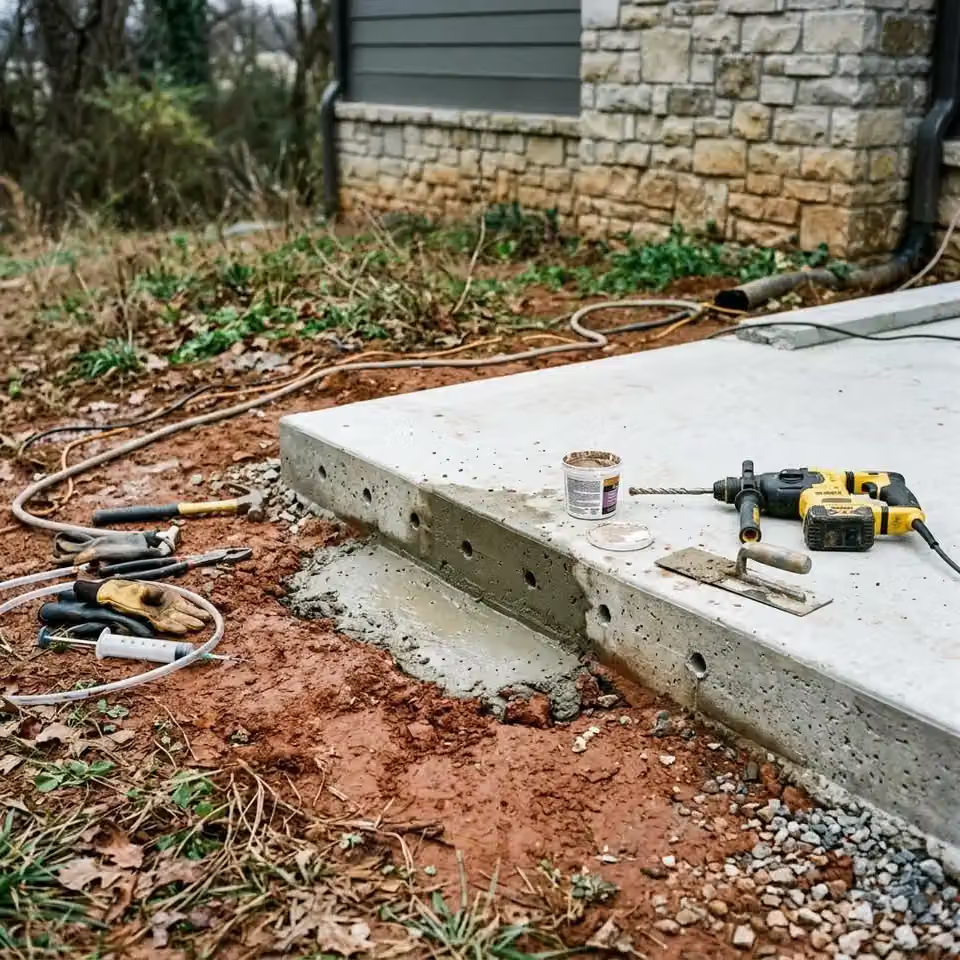
Perimeter settlement is often addressed with piers installed outside the home and bracketed to the slab edge or grade beam. Interior settlement may require access through the floor in selected spots.
Where voids exist below a slab, injection methods can fill them. The right approach depends on whether the slab is sinking with the soil or bridging over a gap.
How Slab Repair Works
- 01
Floor survey
Elevations across the slab identify the low sections.
- 02
Select access
Exterior pier locations or interior access points are chosen.
- 03
Install support
Piers or injection are completed at each location.
- 04
Check and restore
Elevations are rechecked and surfaces are restored.
Plumbing Under the Slab
Water and drain lines run beneath most slabs. A leak can soften soil and cause settlement, and lifting a slab can stress older lines. Plumbing testing before or after repair is often a sensible step.
Floor coverings like tile may show new cracks as a slab moves, so plan flooring repairs after the structure is stable.