
14 / 17Overview
Concrete Slab Lifting Around Murfreesboro, Explained
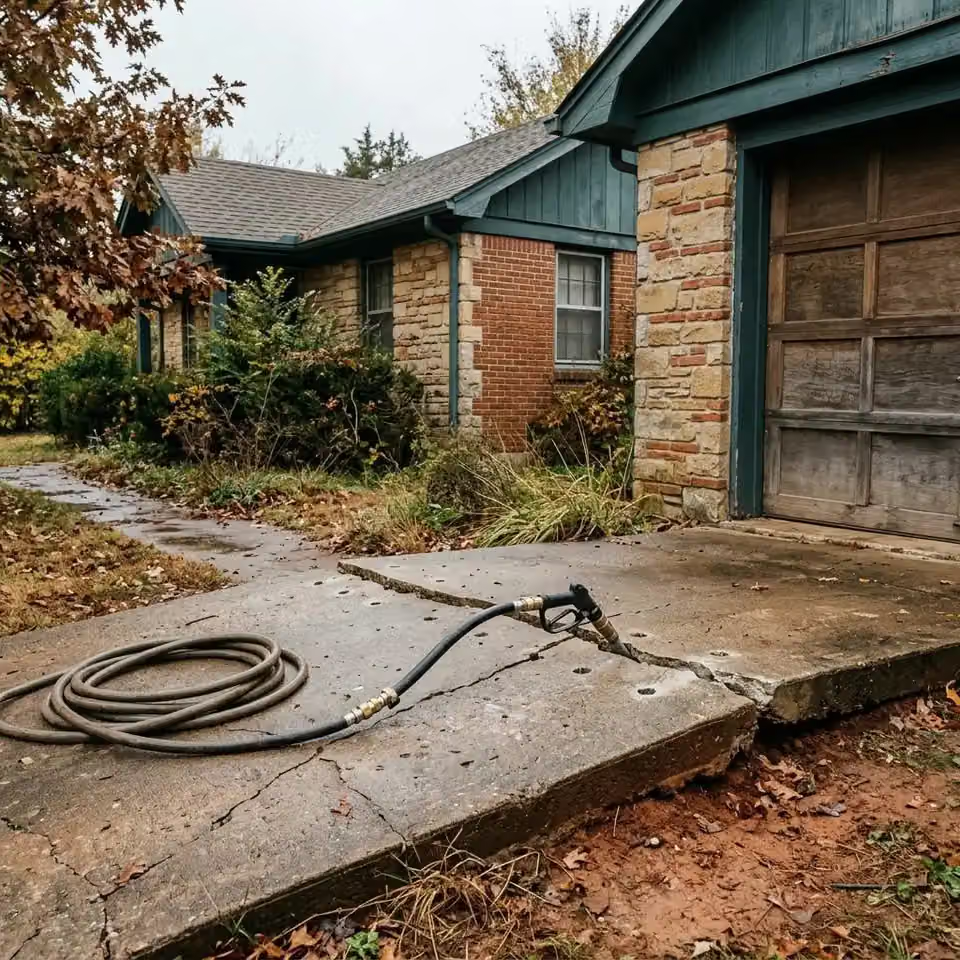
Exterior concrete slabs sink when the soil beneath them washes out, settles, or was never compacted. The result is trip edges, water flowing toward the house, and gaps that keep growing.
Concrete slab lifting raises those slabs by injecting material through small holes to fill voids and press the slab back up. It is generally faster and less disruptive than removal and replacement.
Slabs That Are Good Candidates
- Driveway sections lower than the garage floor
- Sidewalk joints with a raised trip edge
- Patios sloping toward the house
- Porch or stoop slabs separating from steps
- Pool decks or walkways with hollow sounding areas
How Lifting Works
Small holes are drilled in the slab, and material is injected beneath it. As voids fill, pressure lifts the slab gradually. Progress is watched closely so the slab rises evenly and stops at the planned height.
Afterward, holes are patched and joints can be sealed to reduce water getting under the slab again.
Slab Lifting Steps
- 01
Evaluate the slab
Cracks, voids, and drainage are checked to confirm lifting fits.
- 02
Drill access holes
Small holes are placed at planned points.
- 03
Inject and lift
Material is injected while the slab is monitored.
- 04
Patch and seal
Holes are filled and joints are sealed.
When Replacement Makes More Sense
Lifting works best on slabs that are largely intact. Slabs broken into many small pieces, or crumbling at the surface, may be better replaced.
Lifting is for exterior and garage slabs. When a house slab moves, the structural approaches on the slab foundation repair page apply instead.
Slabs that sink once often sink again if water keeps washing soil out from underneath. Checking downspout outlets, sealing joints, and correcting the slope of nearby soil are simple steps that help a lifted driveway, walkway, or patio stay where it was set. Most lifted slabs can be walked on soon after the work is finished.